

No Body Talk Week
Join us as we encourage our friends, schools, synagogues, and communities to take a break from body talk! Eden Village, in partnership with communities all around the country will be hosting workshops for parents, educators, and kids on how to create kind, healthy spaces that de-center body talk and re-center belonging, inclusion, and loving kindness.
Join a revolution in how we talk, connect, and build community!
Sign up to stay up to date on our events and opportunities to partner.
Get Involved
Join a revolution in how we talk, connect, and build community. Here’s how to get involved.

For organizations, schools, and synagogues
- Spread the word!
- Access our comprehensive toolkit
- Join our network of Jewish communities creating spaces of love and connection
For Individuals and Families
- Spread the word!
- Help bring No Body Talk to your community
- Share your experience at your synagogue or school
- Get paired with Eden Village mentor and prepared resources for you to share your experiences with your community

Register for an Event

No Body Talk Workshop for Parents
February 25, 8:00 pm
The Torah of No Body Talk: Jewish Sources for the Soul to Shine
February 26, 12:30 pm
Translating “No Body Talk” Outside of Eden Village
February 26, 7:00 pm

Shabbat Prep with Yoni and Pesach
February 28, 10:00 am
No Body Talk: Choosing Words That Build Confidence, Kindness, and Jewish Values of Respect
March 3, 2:00 pm
Talking about Body Talk: Diverse Approaches to Creating Inclusive Jewish Spaces
March 3, 7:30 pm
No Body Talk Origins and Ripple Effects: A Conversation with Vivian Stadlin
March 4, 8:00 pm
No Body Talk Week National Partners
What is the “No Body Talk” guideline?
No Body Talk is a simple yet transformative practice where we take a break from commenting on our own or others’ appearance – whether those comments are positive, negative, or neutral. Instead of “I love your outfit” or “bad hair day,” we create space for deeper connections and more meaningful conversations.
The impact is remarkable. When we step back from appearance-based comments, young people report feeling relief – like putting down a heavy backpack they didn’t realize they were carrying. Without the constant spotlight on appearance, we make space for what really matters: exploring our gifts, building deep friendships, and growing our sense of purpose. Even more surprisingly, people feel more free to express themselves through how they look, not less.
This isn’t about strict rules – we still address health and safety needs, discuss body image, and have important conversations about social pressures. When someone has spinach in their teeth, we let them know! The goal isn’t to police every interaction, but to reduce the mental noise that comes with constant appearance commentary. Instead of physical compliments, we share more meaningful appreciations, like noticing someone’s kindness or celebrating their unique contributions.
This practice emerged from a deep commitment to Jewish values and creating environments where every person can truly be seen as b’tzelem Elohim – created in the divine image. During National No Body Talk Week (February 26 – March 4), communities across North America will explore how stepping back from appearance-based comments can help us create more meaningful connections and truly honor the divine spark in each person.
What’s Jewish about No Body Talk?
In Jewish tradition, we learn that every person is created b’tzelem Elohim – in the divine image. No Body Talk helps us honor this teaching by stepping back from surface-level comments to truly see and connect with the divine spark in each person. We’re launching this initiative during the joyful month of Adar, when Jewish tradition invites us to turn things upside down and imagine a different way of being. We’ve created a comprehensive sourcesheet exploring No Body Talk’s deep connections to Jewish text and tradition, including connections to the weekly Torah portion during No Body Talk Week. You can access it by signing up to receive our comprehensive toolkit HERE.
What is happening during No Body Talk Week?
National No Body Talk Week (February 26 – March 4) is focused on learning about and exploring this transformative practice. We’re offering virtual workshops for parents and educators, supporting young people in giving divrei torah in their communities, and providing resources for families to have meaningful conversations about appearance, self-expression, and what it means to truly see each other.
How can I participate in No Body Talk Week?
There are many ways to get involved! You can attend a virtual workshop, host a family conversation using our discussion guide, hear from young people who have experienced this practice, or help spread the word in your community. We provide all the resources you need to participate meaningfully. Sign up to learn more HERE.
Is there punishment or something if someone does give a physical compliment?
No. It’s a guideline, not a rule like waterfront safety rules. Overall, our campers tend to champion the guideline among themselves, after a few days of getting used to it in their first year. We do strongly address bullying when that comes up.
What’s the reasoning behind this guideline?
A bunch of things!
It clears time and energy for what we most want to grow here! Our young people overwhelmingly report feeling safe and free here very quickly – so we get to play, build deep friendships, explore our gifts, build skills and build our sense of purpose and meaning. Focusing more on the inner world, in accordance with Jewish values, is a much more fruitful path to healthy growth, and it just makes for more interesting conversations. Our inter-generational community prizes pursuit of wisdom. Camp is an immersion in sound principles of self-worth.
It takes off the table a major source of subtle bullying, social cruelty, and inflated importance of appearance.
The temporary respite from all the body commentary, together with our sessions and informal conversations on body image, helps create a space that naturally fosters breakthrough sharing and insight – about how one feels about one’s own body or the pressure one might feel to look a certain way, and where those messages come from, and tools for going home and being a lighthouse in a world that’s usually really different from camp. Campers come away with a powerful awareness of media influence and social pressures and how all that has impacted them, and agency to engage intentionally with all that. In a society where eating disorders are increasing at alarming rates and consumerism is damaging our environment, the guideline helps campers sort out external “noise” from their own inner guidance.
Why include positive commentary in the guideline? Why not just ban negative body comments?
If you tell me “You have great hair,” for a minute it might feel nice and I might feel a certain kinship with you and obviously it’s not the end of the world. But physical compliments are still judgments on our appearance. This time the verdict was positive; next time it might not be. The scrutiny adds pressure on me to provide an encore, to spend time grooming my hair tomorrow too, so as to continue receiving approval. I might privately hate my hair and wonder whether you actually really like my hair or just want to bring attention to it, or if I’ve received many such compliments I might be concluding that my hair is important to making me valuable. I might wonder why you never compliment my clothing. If others witnessed the compliment, those people might be thinking “I wish my hair looked like that! Maybe I should get it chemically treated,” etc. In short, it’s a whole lot of mental noise. And that’s just for a compliment!
Bonding via appreciations is great – we encourage more meaningful ones, like specific ways in which someone inspires you or a time you noticed someone doing something kind.
As for conversation starters, our campers suggest things like asking about people’s interests or ideas, the story behind a physical item, what they’re excited about, etc.
Do you think all body talk is “bad”?
No.
First, there are the caveats to our guideline: In our yoga and culinary arts instruction and the like, we talk about postures, breathing, nutrition, etc, as part of growing physical health, skills and body awareness.
Obviously any health or safety issue needs to be talked about.
There’s some common sense stuff, like if someone’s fly is down or they have spinach in their teeth, it’s compassionate to let them know.
We discuss body image quite a bit, as called for by the unique community in each bunk and tribe. These conversations and programs are crucial for processing the messages and pressures young people receive and empowering campers to be a force of change in their home communities. We have optional conversations about reclaiming a positive culture around menstruation, the way boys and girls get socialized and noticing/interrupting those patterns, and more.
Beyond this, there can for sure be merit to talking about bodies in safe, supportive contexts, like discussing one’s appearance as artistic self-expression, or expressing physical appreciation within a healthy relationship. While we haven’t carved out caveats for these kinds of scenarios, we find the guideline extremely helpful in creating that safe, supportive baseline context.
Remember, camp is just one or two months of the year – our aim is to equip our campers to thrive in the other ten months and for their whole lives. And no one is policing every interaction – it’s just a guideline to raise our awareness, not a hard-and-fast rule.
How does the guideline play out at camp?
The body talk guideline is part of Eden Village’s larger culture, which is designed not as a retreat from the “real world” but as a training ground to let our kids and teens step more powerfully into the world – with more consciousness, sense of self-worth, empathy and tools for making social change.
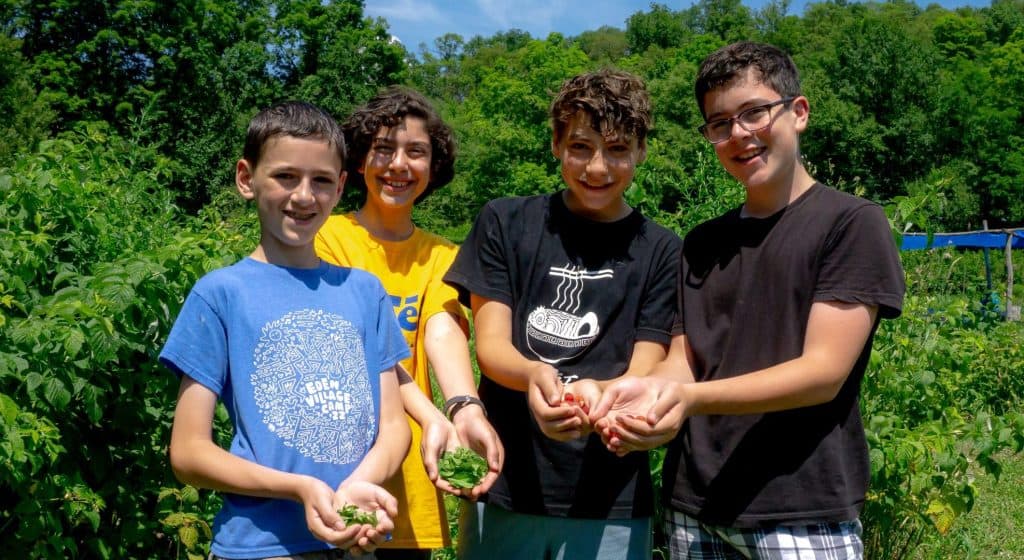
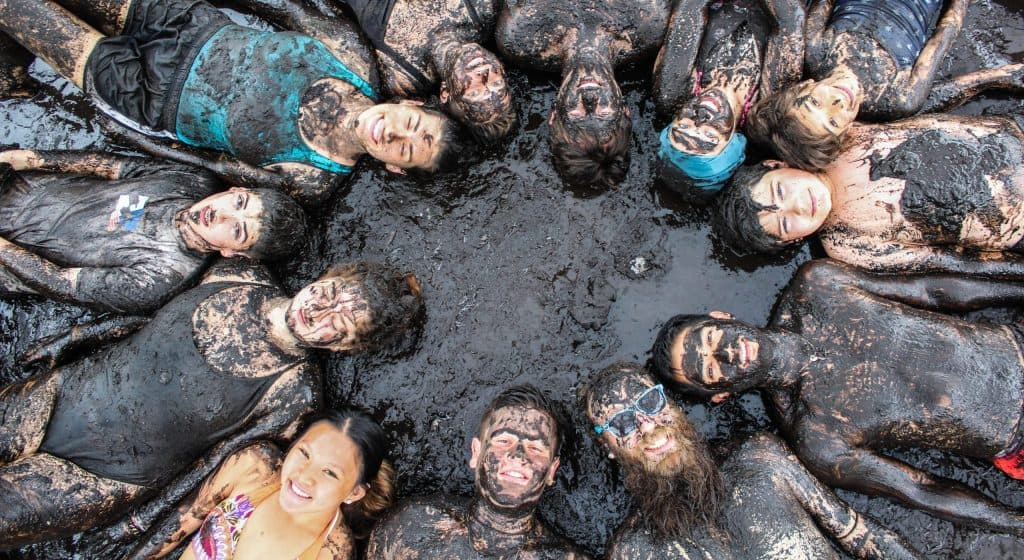
At first, the guideline feels weird – campers (and staff!) realize how ingrained body talk is and catch themselves a lot. Campers’ tongue-in-cheek compliments, like saying “Your soul shines” when someone is looking particularly spiffy, are part of acknowledging the urge to give physical compliments. Some kids tell us that early in, they spend time wondering what people would be saying about their bodies. We have conversation circles and informal check-ins as needed to address the body image issues that come up for people, and explore the urge to give and receive body commentary. Within a few days, these impulses generally fade significantly. Bunk groups and individuals often start parading around in costumes, capes, face paint, outrageous outfits. Each cabin has its own flavor. (The signs over the mirrors mentioned in the New York Times article – “Don’t check your appearance; check your soul” – was one counselor’s initiative in her bunk, not a camp-wide slogan.) We have fun!
The vast majority of campers come to either treasure this guideline, or just kind of forget about it as not a big deal – just a small aspect of this supportive, healthy-living-focused community.
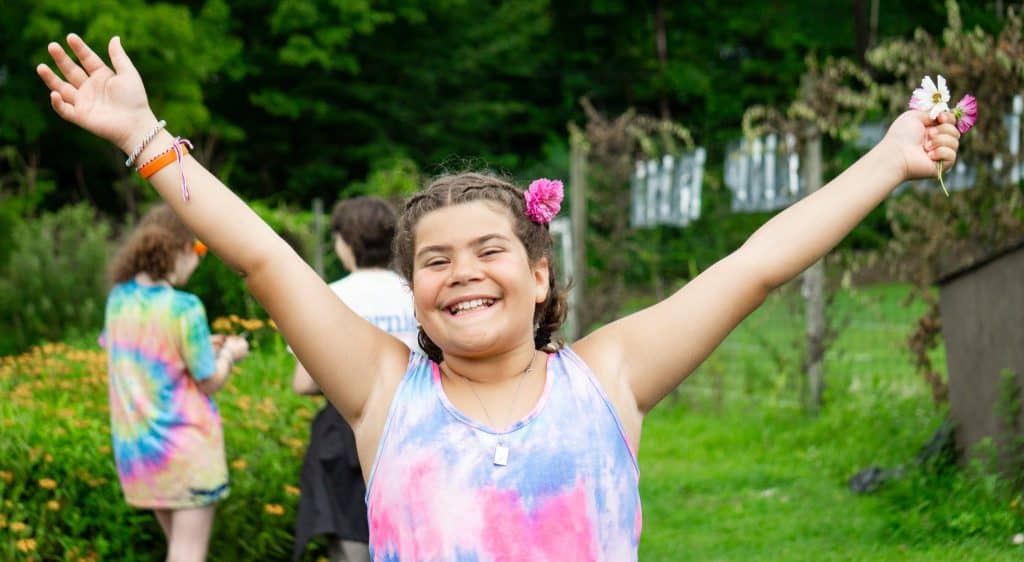
Once they’ve been here a few days, many campers, especially our teen girls, feel relief and sometimes grief at having put down a heavy pack they hadn’t necessarily realized they were carrying. They see in stark contrast all that they’ve gone through in school, all the distorted messages taken in. There’s healing that comes from recognizing this. From there, they get playful and silly. They take joy in doing “love pranks” (surprises to make others’ lives more wonderful), working on projects that light them up, painting signs with empowering slogans to post around camp, etc. They end up forming some of the deepest bonds of their lives.
It is a privilege to see hundreds of campers transmitting to each other the message of simple self-acceptance.
Campers, parents and staffers regularly tell us the guideline has been a major positive force in their lives. A handful of campers have started body talk awareness campaigns in their schools, complete with posters and facebook page, and a few have started anti-bullying clubs.
Questions?
Want support bringing this to your community? We’re here to help!